


 Direction
Read Our Other Artilces
Cataract Surgery : When is Surgery the Right Choice?
What is Diabetic Retinopathy? Symptoms, Stages, Treatment and Why Regular Eye Check-ups Can Save Your Vision
Article Summary
Key takeaways from this article:
- Diabetic retinopathy is a serious eye complication of diabetes that damages the blood vessels in the retina and is one of the leading causes of preventable blindness in India.
- In the early stages, diabetic retinopathy causes no pain and no obvious symptoms, which is why so many patients do not know they have it until significant vision loss has already occurred.
- The condition progresses through four stages from mild to proliferative, and the earlier it is caught, the more treatment options are available and the better the outcome.
- Treatment options include laser therapy, anti-VEGF injections and vitrectomy surgery, depending on the stage – but the most powerful tool is early detection through regular diabetic eye check-ups.
- Every person with diabetes, whether Type 1 or Type 2, should have a comprehensive dilated eye examination at least once a year, regardless of whether they notice any vision problems.
India is often referred to as the diabetes capital of the world, and that is not an exaggeration. With over 100 million people living with diabetes in our country today, the downstream consequences of poorly controlled blood sugar are something we see every day in our clinic at Raghudeep Eye Hospital. One of the most serious, and most preventable, of those consequences is diabetic retinopathy.
Diabetic retinopathy does not announce itself. It does not cause pain. It does not blur your vision until it is often quite advanced. And by then, the damage can be permanent.
This article is for every person living with diabetes, and for every family member who cares for someone who does. Understanding what diabetic retinopathy is, what to look for, and when to act could genuinely save your vision.
Start a Chat on WhatsApp

We’re Available!
What is Diabetic Retinopathy?
Your retina is the light-sensitive layer at the back of your eye, a bit like the film in a camera. It is responsible for converting the light that enters your eye into signals that your brain interprets as vision. To do its job, the retina needs a constant, healthy supply of blood through a network of very small blood vessels.
Diabetes affects the entire body by causing chronically high blood sugar levels. Over time, this elevated blood sugar damages those small blood vessels throughout the body, including the ones that supply the retina. When the retinal blood vessels are damaged, they can leak fluid, bleed, swell or grow abnormally. This is diabetic retinopathy.
The result, if left untreated, is a retina that cannot function properly. Blurred vision, dark spots, distorted vision and eventually complete vision loss can all result from diabetic retinopathy. The tragedy is that all of this is preventable with the right monitoring and timely treatment.
India's Diabetic Retinopathy Reality
Studies estimate that approximately 1 in 6 people with diabetes in India has some form of diabetic retinopathy. With over 100 million diabetics in the country, that represents a staggering number of people at risk of preventable vision loss. Many of them do not know they have the condition because they have never had a diabetic eye examination.
Who is at Risk of Developing Diabetic Retinopathy?
Anyone with diabetes is at risk of developing diabetic retinopathy. The longer you have had diabetes and the less controlled your blood sugar has been, the higher your risk. Specific risk factors include:
- Duration of diabetes: The longer you have had the condition, the higher the cumulative risk. People who have had diabetes for 20 or more years have a significantly elevated risk.
- Poor blood sugar control: High HbA1c levels over time are the single biggest risk factor for developing and progressing diabetic retinopathy.
- High blood pressure: Hypertension damages blood vessels throughout the body, compounding the damage that diabetes already causes in the retina.
- High cholesterol: Elevated lipids in the blood contribute to blockage and leakage in retinal blood vessels.
- Kidney disease: Diabetic kidney disease and diabetic retinopathy often occur together, as both are caused by microvascular damage from poorly controlled blood sugar.
- Pregnancy: Women with pre-existing diabetes can experience rapid progression of retinopathy during pregnancy.
- Smoking: Tobacco use worsens blood vessel damage and significantly increases the risk of progression.
Type 1 diabetics and Type 2 diabetics are both at risk. Even if you feel perfectly fine and your vision seems normal, you may already have early diabetic retinopathy without any symptoms.
Early Warning Signs of Diabetic Retinopathy: What to Watch For
Here is the difficult truth about diabetic retinopathy: in the early stages, there are often no symptoms at all. This is precisely why it is so dangerous and why we emphasise eye check-ups so strongly for all our diabetic patients at Raghudeep Eye Hospital in Ahmedabad and Jaipur.
As the condition progresses, some or all of the following symptoms may appear:
- Blurred or fluctuating vision that changes from day to day
- Dark or empty areas appearing in your central or peripheral vision
- Difficulty reading or seeing fine details even with your glasses
- Floaters – small spots, strings or cobwebs drifting across your field of vision
- Sudden flashes of light in one or both eyes
- Poor night vision and difficulty adjusting from bright to dim lighting
- Colours appearing washed out or less vivid than before
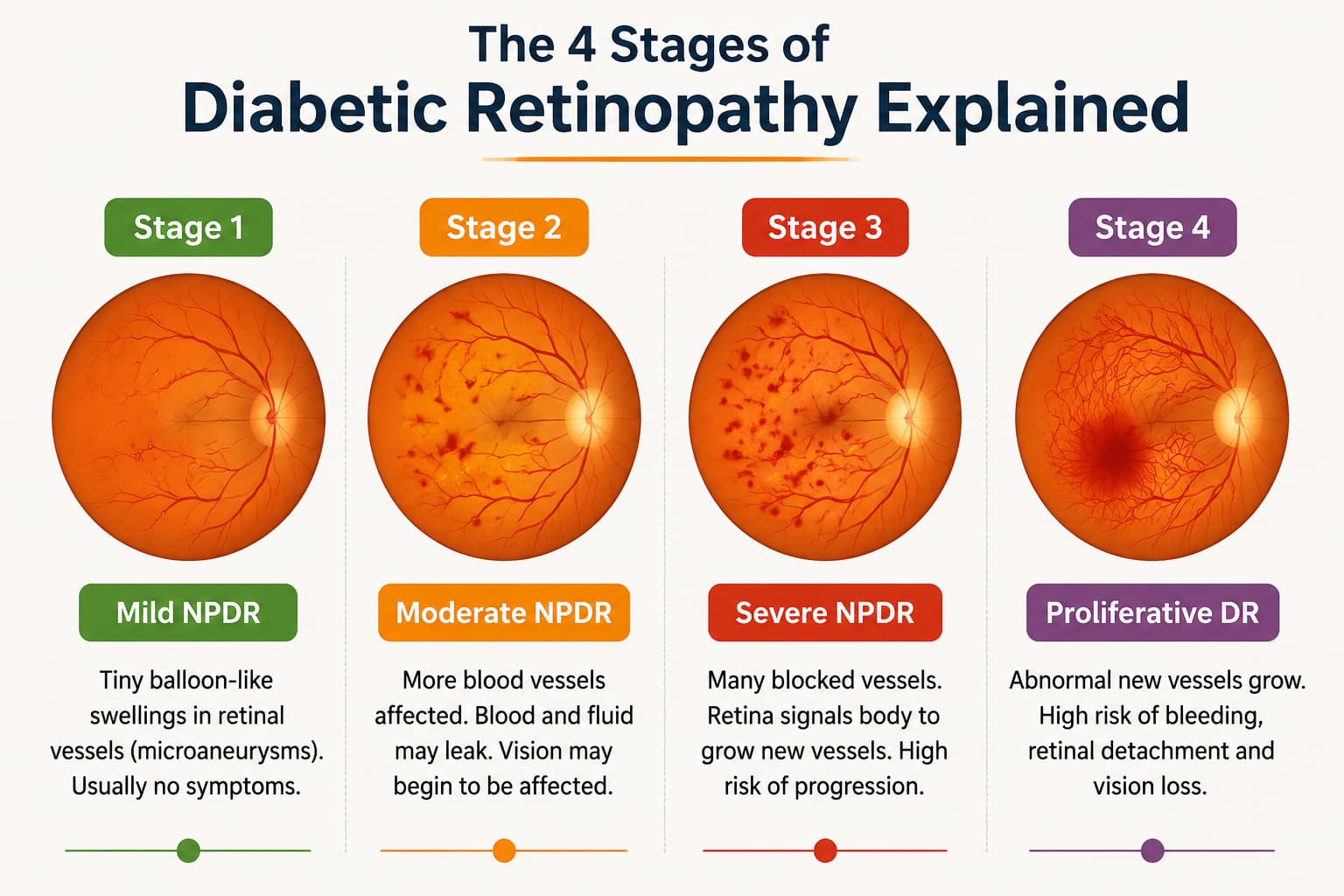
The 4 Stages of Diabetic Retinopathy Explained
Diabetic retinopathy progresses through four defined stages. Understanding where you are in this progression helps us choose the right treatment and set the right expectations.
Stage 1
Mild NPDR
Tiny balloon-like swellings in retinal vessels (microaneurysms). Usually no symptoms.
Stage 2
Moderate NPDR
More blood vessels affected. Blood and fluid may leak. Vision may begin to be affected.
Stage 3
Severe NPDR
Many blocked vessels. Retina signals body to grow new vessels. High risk of progression.
Stage 4
Proliferative DR
Abnormal new vessels grow. High risk of bleeding, retinal detachment and vision loss.
Stage 1: Mild Non-Proliferative Diabetic Retinopathy (NPDR)
At this earliest stage, tiny balloon-like swellings called microaneurysms develop in the blood vessels of the retina. These are small, localised weaknesses in the vessel walls caused by damage from high blood sugar. At this point, most patients have no symptoms at all and vision is usually unaffected. This is the stage where intervention has the greatest impact, because aggressive management of blood sugar, blood pressure and cholesterol can slow or even halt progression.
Stage 2: Moderate Non-Proliferative Diabetic Retinopathy
As the disease advances, more blood vessels are affected and they begin to swell and lose their ability to transport blood normally. The retina may begin to experience areas of reduced blood supply. Blood and fluid may start leaking from the damaged vessels. If this fluid accumulates at the macula, the central part of the retina responsible for detailed vision, it causes a condition called diabetic macular oedema, which can blur central vision and affect the ability to read or recognise faces.
Stage 3: Severe Non-Proliferative Diabetic Retinopathy
By this stage, a significant number of retinal blood vessels are blocked, depriving larger areas of the retina of their blood supply. The oxygen-starved retina sends signals to the body to grow new blood vessels. This is a critical turning point because those new vessels, if they develop, are fragile, abnormal and prone to bleeding. Patients at this stage are at high risk of progressing to the final stage if not treated promptly.
Stage 4: Proliferative Diabetic Retinopathy (PDR)
This is the most advanced and most dangerous stage. Fragile new blood vessels grow on the surface of the retina and into the vitreous gel that fills the eye. These vessels can bleed suddenly and severely, causing a vitreous haemorrhage that can dramatically and rapidly reduce vision. Scar tissue from these abnormal vessels can also pull on the retina, causing a tractional retinal detachment, which is a true ophthalmic emergency. Without prompt treatment, proliferative diabetic retinopathy can cause severe and permanent vision loss or even blindness.
Our Services
Glaucoma SpecialistDiabetic Retinopathy Treatment Options
The good news is that with early detection and appropriate treatment, the progression of diabetic retinopathy can be significantly slowed and vision loss can often be prevented. The right treatment depends on the stage of the condition and your specific circumstances.
Blood Sugar, Blood Pressure and Cholesterol Control
For early stage diabetic retinopathy, the most powerful intervention is improving the control of the underlying diabetes and associated risk factors. A reduction in HbA1c of just 1% has been shown in clinical studies to significantly reduce the risk of progression of diabetic retinopathy. Working closely with your diabetologist alongside your eye specialist is essential at every stage of this condition.
Laser Treatment (Focal and Pan-Retinal Photocoagulation)
Laser treatment has been the mainstay of diabetic retinopathy management for several decades. Focal laser is used to treat specific areas of leaking blood vessels, particularly in cases of diabetic macular oedema. Pan-retinal photocoagulation (PRP) treats the peripheral retina in cases of severe NPDR or early PDR, reducing the drive for new abnormal vessel growth and significantly reducing the risk of vitreous haemorrhage and retinal detachment.
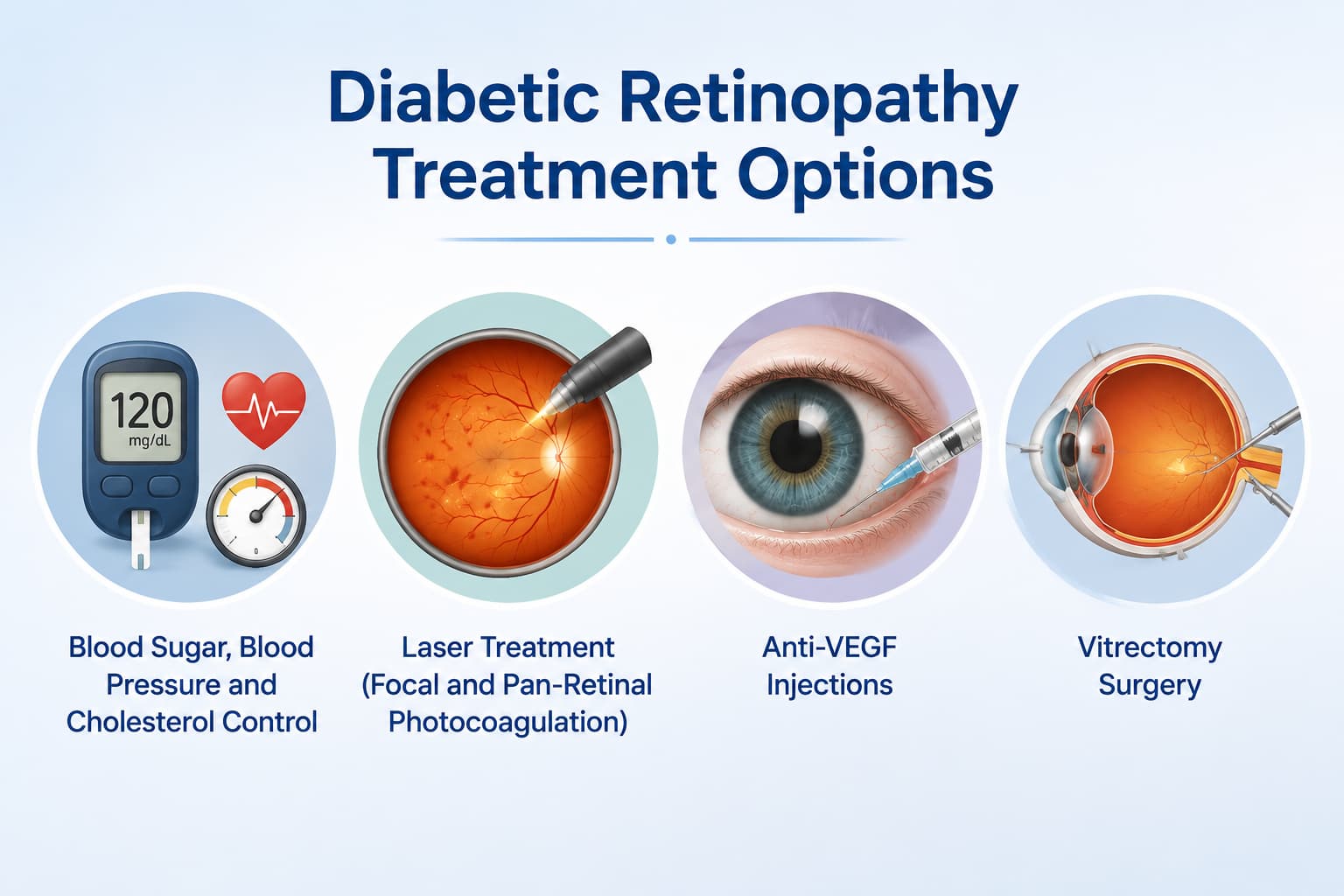
Anti-VEGF Injections
Anti-VEGF (Vascular Endothelial Growth Factor) injections are one of the most significant advances in retinal medicine in the past two decades. These medications are injected into the vitreous of the eye and work by blocking the chemical signals that drive the growth of abnormal new blood vessels. They are now the preferred first-line treatment for diabetic macular oedema and are also used in proliferative diabetic retinopathy. Multiple injections may be needed over time, and the frequency is tailored to each patient’s response to treatment.
Vitrectomy Surgery
In advanced cases of proliferative diabetic retinopathy where vitreous haemorrhage is not clearing or where tractional retinal detachment has occurred, vitrectomy surgery is required. This is a microsurgical procedure in which the vitreous gel and blood are removed from the eye and the retina is repaired. Our vitreoretinal surgeon at Raghudeep Eye Hospital in Ahmedabad is experienced in managing even the most complex cases of advanced diabetic retinopathy requiring vitrectomy.
How Often Should Diabetics Get Their Eyes Checked?
This is the question I am most passionate about answering correctly, because the answer is not complicated – but it is often ignored.
- Type 1 diabetes: First diabetic eye examination within 5 years of diagnosis, then every year
- Type 2 diabetes: Diabetic eye examination at the time of diagnosis, then every year
- Poorly controlled diabetes (high HbA1c): Every 6 months or as advised by your specialist
- Existing diabetic retinopathy: More frequent examinations depending on stage, as directed by your retina specialist
- Pregnant women with diabetes: Before conception if possible, then once in each trimester
A diabetic eye examination is not the same as a routine vision test. It requires dilation of the pupils to allow the retina to be examined properly. At Raghudeep Eye Hospital in Ahmedabad and Jaipur, a comprehensive diabetic eye check-up includes fundus photography, optical coherence tomography (OCT) to assess the macula, and a full dilated retinal examination by our retina specialist.
Diabetic Retinopathy Treatment at Raghudeep Eye Hospital in Ahmedabad and Jaipur
At Raghudeep Eye Hospital, our Retinal Treatment service is led by experienced vitreoretinal specialists who manage the full spectrum of diabetic eye disease, from early non-proliferative retinopathy to complex proliferative disease requiring vitrectomy surgery.
We use advanced diagnostic technology including high-resolution fundus photography, optical coherence tomography (OCT), OCT-angiography and fluorescein angiography to accurately stage and monitor diabetic retinopathy in each patient. Our treatment approach includes laser photocoagulation, anti-VEGF injections and vitreoretinal surgery, all offered under one roof at our Ahmedabad eye hospital.
Our team also works closely with patients to help them understand the connection between their systemic diabetes management and their eye health. We believe that truly effective diabetic retinopathy care is a partnership between the patient, their diabetologist and their eye specialist.
If you or a family member has diabetes and has not had a recent diabetic eye check-up, please do not delay. Book a consultation with our retina specialists in Ahmedabad or Jaipur today.
Call Now for Quick Support
Call Now
Diabetic Retinopathy is Preventable: Early Action Saves Sight
Diabetic retinopathy is one of the most serious eye complications of diabetes, but it is also one of the most preventable causes of blindness. The disease does not give you much warning. It develops quietly, without pain and often without noticeable vision changes, until it is significantly advanced.
The single most powerful thing you can do if you have diabetes is to have a comprehensive dilated retinal examination every year, without exception. If changes are found early, we have excellent tools to slow or stop the progression and protect your vision. If we catch it late, our options become more limited and the damage may already be done.
At Raghudeep Eye Hospital in Ahmedabad and Jaipur, we see the difference that early detection makes every single day. We are here to help you stay ahead of this disease and keep seeing the things that matter most to you.
Our Services
Retina TreatmentFrequently Asked Questions About Diabetic Retinopathy
Frequently Asked Questions About Diabetic Retinopathy
Can diabetic retinopathy be cured completely?
Diabetic retinopathy cannot be completely reversed once it has occurred, but its progression can be significantly slowed and in many cases halted with timely treatment. The most effective approach is early detection and a combination of systemic control of diabetes with targeted eye treatments like anti-VEGF injections and laser therapy. At Raghudeep Eye Hospital in Ahmedabad and Jaipur, our retina specialists work with each patient to create an individualised management plan based on the stage of their retinopathy and overall health.
My blood sugar is well controlled. Do I still need regular eye check-ups?
Yes, absolutely. Good blood sugar control significantly reduces the risk of developing diabetic retinopathy and slows its progression, but it does not eliminate the risk entirely. The cumulative effect of diabetes on the small blood vessels of the retina can still cause damage even in patients with reasonably well-controlled sugar levels. Every person with diabetes, regardless of how well their sugar is managed, should have a comprehensive dilated retinal examination at least once a year.
What is diabetic macular oedema and how is it different from diabetic retinopathy?
Diabetic retinopathy refers to the overall damage to the retinal blood vessels caused by diabetes. Diabetic macular oedema (DMO) is a specific complication of diabetic retinopathy where fluid leaks from damaged blood vessels and accumulates in the macula, the central part of the retina responsible for detailed vision. DMO is the most common cause of vision loss in people with diabetic retinopathy and is now treated very effectively with anti-VEGF injections, which can stabilise and often improve central vision when started early.
Are anti-VEGF injections painful? How often are they needed?
Anti-VEGF injections are administered under local anaesthetic eye drops, so most patients feel very little discomfort during the procedure. Some patients experience mild pressure or a brief stinging sensation. The injections are typically given in a clinical setting and the procedure itself takes only a few minutes. The frequency depends entirely on your response to treatment and the severity of your condition. Initially, injections may be given monthly, with intervals extended as the retina stabilises. Our retina specialists at Raghudeep Eye Hospital will monitor your response and adjust the treatment schedule accordingly.
Can I go blind from diabetic retinopathy?
Without timely diagnosis and treatment, advanced diabetic retinopathy can cause severe vision loss or blindness, particularly in the proliferative stage when bleeding and retinal detachment can occur. However, with regular eye check-ups, early detection and appropriate treatment, the risk of blindness from diabetic retinopathy is significantly reduced. This is why we cannot stress enough the importance of annual diabetic eye examinations. At Raghudeep Eye Hospital in Ahmedabad and Jaipur, our aim is to detect retinopathy at its earliest stage and intervene before vision loss occurs.
How is a diabetic eye check-up different from a regular eye test?
A regular eye test at an optician primarily checks your spectacle power and basic visual acuity. A diabetic eye examination at Raghudeep Eye Hospital in Ahmedabad is a comprehensive medical assessment of the retina that includes pupil dilation to allow a full view of the retina, fundus photography to document the retinal appearance, optical coherence tomography (OCT) to measure the thickness of the retina and detect macular oedema, and a detailed examination by a retina specialist. This examination can detect diabetic retinopathy, macular oedema and other diabetes-related eye conditions that a routine eye test at an optical shop would completely miss.